About David
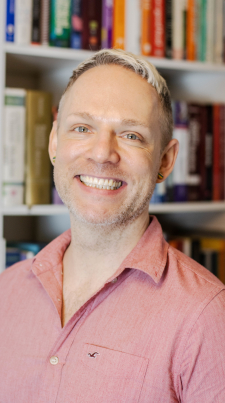
David has been an acupuncturist in private practice in Reading since 2016 and has taught acupuncture techniques and Chinese Medicine theory for the last three years. After studying Integrated Traditional Chinese Medicine (TCM) and Five Element acupuncture David moved on to the Yuan college in South London where he studied and eventually taught.
David’s approach to healing is in line with Classical acupuncture, where the patient is treated rather than the condition. Diagnostic tools such as pulses, tongue observations, palpation and questioning are employed to determine the cause of the issue and therefore the root is able to be treated leading to a lessening of symptoms. This not only brings relief of the symptoms but also strengthens the overall vitality of the patient so they feel the benefits on a physical, mental and emotional level.
David is well versed in using acupuncture to treat chronic and acute cases in many areas. His approach goes beyond surface-level symptoms, prioritising patients’ well-being by going the extra mile and seeking out the root causes rather than simply treating symptoms. He recognises and values the individuality of each person who seeks his care, motivating him to prevent illness and promote overall health rather than just provide symptom relief.
What is Acupuncture?
Classical Acupuncture is acupuncture in its original form. Before Communist China westernised the practice of acupuncture it was an ancient, sophisticated and comprehensive form of medicine which had the capacity to treat any ailment.
Most people in the West might be familiar with acupuncture being used to treat pain but with Classical Acupuncture we have the ability to expand to treat common, severe and complex cases including the physical, mental and emotional states.
Fortunately, there is an extensive recording and commentary within Chinese Medicine which has survived for 3000 years, the knowledge being passed down from teacher to student so that the future generations may benefit from the wisdom and knowledge of this precious medicine.
Acupuncture works on the principle of balance within all systems of the body. That balance is maintained by the smooth flow of Qi (pronounced ‘Chee’) through the body. Qi is best understood in the West as energy but can also be translated as vitality or life force. In reality Qi is much more than that and the understanding of Qi is a fundamental corner stone of Chinese Medicine. With the application of acupuncture, the Qi of a patient can be accessed and instructed to rectify imbalances that are causing symptoms.
Just treating the symptoms of disease is like just treating the leaves of a diseased tree and ignoring the roots. If the cause is still there, then all that is happening is the symptoms are being masked and will eventually overwhelm the system they are affecting which will then spill over to other systems producing more symptoms.
Acupuncture is a truly holistic approach to medicine with a deep understanding of the complexity of connections within the human body. Treatment focuses on the individual person as a whole not just their illness. In this way all symptoms can be viewed as one and focus treatment on what is usually a common root cause. Because treatment is tailored to each person treatment can differ greatly from patient to patient.
Treatment may include any of the following techniques:
Needling
Guasha
Like cupping guasha will usually produce bruise like marks which will fade with time.
Cupping
Oil is applied to the skin and vacuum cups are placed on the skin and a suction gun is used to draw the air out of the cup pulling the tissues underneath into the cup. Once in this position the cup can either remain static or it can be moved across the skin to affect the tissues of a wider area.
When using fire cups the vacuum is created by placing a flame inside the cup and then quickly withdrawn and the cup placed on the skin. This method is particularly useful for drawing cold and flu out of the body due to the heat used to create the vacuum.
Cupping will usually leave some bruise like marks on the skin which will fade over time.
Moxa
Bleeding